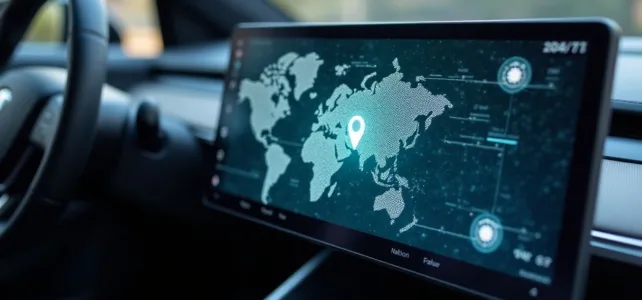
The ability to track a vehicle’s location in real time, once reserved for science fiction movies, is now a daily reality. This technological advancement, known as vehicle geolocation, has transformed the way companies manage their fleets and how individuals ensure the security of their cars. Far from being just a gadget, vehicle geolocation has become an essential tool for optimizing logistics operations, reducing costs, and improving security.
The Foundations of Vehicle Geolocation
To fully grasp the impact of this technology, it is important to understand how it works. Vehicle geolocation is based on fundamental principles that combine cutting-edge technology and innovation.
Recommended read : The benefits of a bathtub door
Vehicle geolocation uses a combination of GPS satellites, integrated sensors, and specialized software to determine the precise location of a vehicle. Satellites orbiting the Earth send signals that are captured by a GPS receiver installed in the vehicle. This receiver analyzes these signals to calculate the vehicle’s exact coordinates.
The collected data is then transmitted to a central server where it is processed by tracking software. This software allows real-time visualization of the vehicle’s position, as well as storing the history of movements. This information is accessible via mobile applications or online platforms, offering great flexibility to users.
Recommended read : Explore the world of prepaid cards: a flexible solution for managing your finances
Concrete Benefits for Businesses and Individuals
The benefits of vehicle geolocation are numerous and varied, both for businesses and private vehicle owners.
- Resource Optimization: companies can track the position of each vehicle in their fleet, allowing them to optimize routes and allocate resources more efficiently.
- Cost Reduction: by decreasing travel time and improving delivery efficiency, companies can reduce fuel and maintenance costs.
- Increased Security: owners can monitor their vehicle’s position in real time, reducing the risk of theft and allowing for quick responses in case of problems.
- Improved Customer Service: by providing accurate information on delivery arrival times, companies enhance customer satisfaction.
Challenges and Limitations of Geolocation
Despite its advantages, vehicle geolocation does not come without challenges. It is crucial to identify these obstacles in order to better overcome them.
The main challenge lies in the protection of personal data. Geolocation systems collect a significant amount of information about vehicle movements, raising questions of privacy and data protection. Companies must ensure compliance with current regulations to avoid any legal issues.
On the other hand, certain geographical areas, such as mountainous regions or dense urban environments, may pose GPS reception problems. These interferences can affect the accuracy of location data.
Finally, the initial investment to set up a geolocation system can be a barrier for some small businesses, although long-term savings can significantly offset this expense.
The Future of Vehicle Geolocation
The rapid development of geolocation technologies opens up exciting new prospects for the future.
- Geolocation systems are expected to integrate more deeply with other emerging technologies, such as artificial intelligence and the Internet of Things, to provide even more sophisticated solutions.
- The accuracy of location data will continue to improve with the advent of new satellites and advanced communication technologies.
- Concerns about data security will drive companies to invest more in cybersecurity to protect their customers’ sensitive information.
- The vehicle geolocation market is expected to experience significant growth, with increasing demand from businesses looking to optimize their logistics operations and individuals wanting to secure their vehicles.
Vehicle geolocation represents a major technological advancement that continues to transform the landscape of transportation and logistics. By providing increased visibility into vehicle positions, it not only allows for the optimization of operations and cost reduction but also improves security and customer satisfaction.