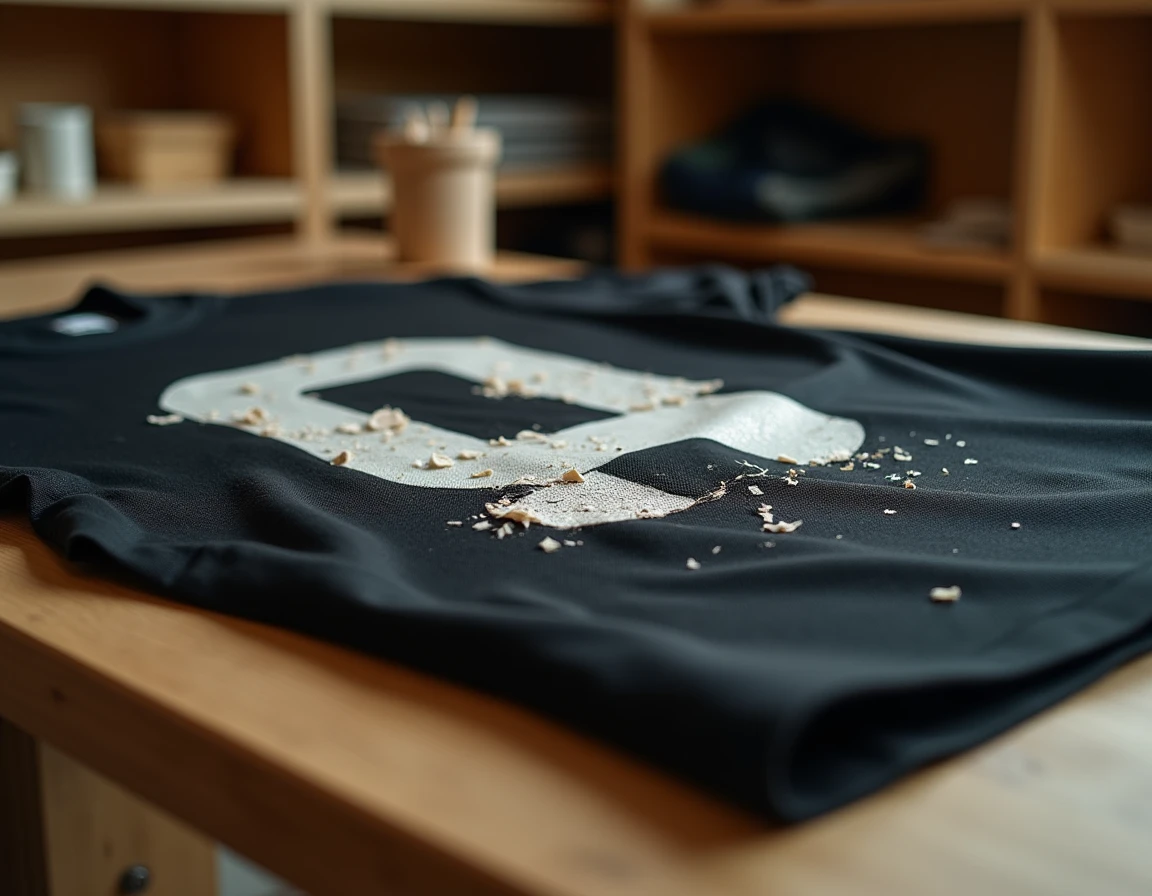
A flocking that starts to lift after a few washes raises a specific technical question: is the problem due to the flex, the fabric, or the application process? The answer varies depending on the type of fabric and the method of application used. Identifying the real cause allows for choosing the right repair or avoiding reproducing the same defect on a new marking.
Flocking on technical fabric or cotton: comparison of delamination factors
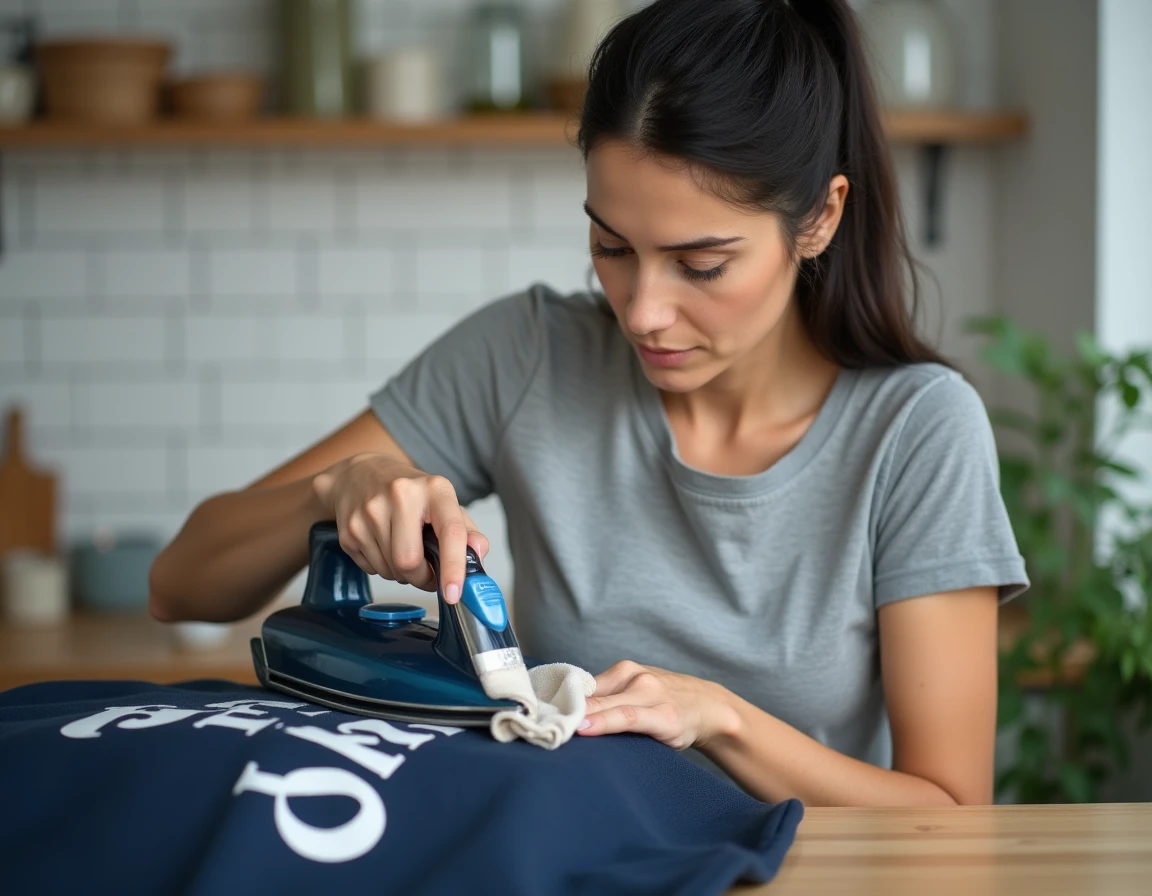
Competitors rarely address the distinction between fabrics, yet this is the parameter that changes everything. A flocking applied to a breathable polyester sports jersey does not react like a flocking on a 100% cotton t-shirt. Here are the concrete differences by material type.
| Criterion | Classic Cotton | Breathable Polyester / Sports Jersey | Windbreaker / K-Way |
|---|---|---|---|
| Initial adhesion of the flex | Good (open, porous fibers) | Average (smooth fibers, water-repellent treatments) | Poor (coated surface, very smooth) |
| Sensitivity to application temperature | Tolerant (wide range) | High (risk of melting or deforming the fabric) | Very high (the fabric can melt or blister) |
| Durability after repeated washes | Good if applied correctly | Variable, frequent delamination at the edges | Poor without specific adhesive |
| Reflocking possible? | Yes, with iron or press | Yes, but with low-temperature flex suitable | Difficult, often requires a professional |
Polyester poses a surface problem: the fibers are smooth and often treated to wick moisture away. This treatment creates a barrier between the heat-activated adhesive and the fabric. On a windbreaker or K-Way, the waterproof coating further complicates the situation.
To explore the solutions if the flocking lifts on these specific materials, one must first understand that standard flex (the one used on cotton) is simply not designed to adhere to technical surfaces.
Trio of combined causes behind lifting flocking
Feedback from customization workshops confirms that a flocking that lifts during washing rarely results from a single cause. The delamination most often stems from a trio of factors that mutually reinforce each other.
Press or iron settings
Temperature, pressing time, and pressure form an inseparable set. A temperature that is too low prevents the adhesive from melting completely into the fibers. Insufficient pressure leaves micro-pockets of air under the flex, which become delamination points at the first wash.
On a technical fabric like a sports jersey, the margin for error is significantly reduced. Too much heat deforms the polyester, too little and the adhesive does not bond.
Improperly suited or overly treated fabric
The moisture-wicking, stain-resistant, or water-repellent treatments applied in factories to technical garments create an invisible layer that prevents the heat-activated adhesive from penetrating the fibers. A treated water-repellent fabric significantly reduces the adhesion of the flex, even with a well-adjusted press.
Too aggressive washing routine
Hot water, intensive spinning, high-temperature tumble drying, and detergents containing bleaching agents gradually degrade the adhesive. Each aggressive wash cycle weakens the bond between the flex and the fabric.
- Wash the flocked garment inside out, at low temperature, without fabric softener or bleaching agents
- Avoid tumble drying or set it to a delicate low-temperature program
- Do not rub directly on the flocking during manual stain removal
- Space out washes when the garment is not actually dirty (a jersey worn for an hour does not require a full cycle)
Expired flex and DTF: two parameters that users often overlook
Several printers report a link between early delamination and flex that is too old or poorly stored. A roll of heat-activated flex that has exceeded its optimal lifespan loses some of its adhesive properties. Some workshops now systematically check the manufacturing date of their rolls before production.
This factor is invisible to the end customer. A flocking done with “expired” flex may look correct when it comes out of the press, then lift after very few washes. If you have a flocking done by a provider and the result does not hold despite gentle washing, the quality of the consumable used deserves to be questioned.
DTF as an alternative to classic flex
The DTF (Direct To Film) technique is gaining ground precisely because it better addresses adhesion issues on technical fabrics. Properly applied DTF prints hold up better to washes than classic flex on polyester and synthetic materials. The DTF film deposits the ink and adhesive in a single operation, reducing the risks associated with press settings.
However, DTF does not completely eliminate the problem on coated fabrics like windbreakers. The surface remains too smooth to guarantee durable adhesion without specific preparation of the fabric.
Reflocking a sports jersey: method suitable for polyester
Reattaching a flocking on cotton with an iron and parchment paper works in most cases. On breathable polyester, this standard approach often fails. Here’s what changes.
A domestic iron does not allow for precise temperature control on synthetic materials. The range between “not hot enough to reactivate the adhesive” and “too hot, the polyester melts” is very narrow. A professional hot press with precise degree settings remains the most reliable method for reflocking a sports jersey.
If the original flocking was standard flex, replacing it with a low-temperature flex specific to polyester significantly improves durability. These flexes melt at a temperature compatible with synthetic textiles without deforming them.
- Clean old adhesive residues before applying a new flex (a residue prevents the new layer from adhering properly)
- Use a flex designed for low temperatures if the fabric is polyester or a synthetic blend
- Prefer a hot press over an iron to control pressure and temperature simultaneously
On a windbreaker or K-Way, the coated layer complicates any home repair. Entrusting the reflocking to a professional equipped remains the most realistic solution for these materials. The cost of professional reflocking is still lower than that of replacing the garment, especially for a custom jersey or club equipment.
The choice of fabric at the time of the initial order determines the durability of the marking much more than the washing method. A flocking on cotton properly applied with recent flex and washed at low temperature will last for years. The same flex on an unprepared breathable jersey will start to lift within weeks.