
The living area of a property determines the amount of property tax, the calculation of rent in leasing, and even the level of compensation from home insurance. An error of a few square meters, whether it comes from an old declaration, unreported work, or a simple measuring mistake, can have financial repercussions for several years. Correcting this area requires knowing which data to rectify, with whom to speak, and what supporting documents are needed.
Living area, Carrez area, and tax area: three concepts not to be confused before any correction

The first source of error does not come from the measurement itself, but from the confusion between three legal definitions that do not cover the same perimeters. The living area, defined by Article R.156-1 of the Construction Code, corresponds to the floor area after deducting walls, partitions, steps, stairwells, ducts, and door and window frames. It also excludes any area where the ceiling height is less than 1.80 m.
The Carrez area, on the other hand, only applies to co-ownership lots and includes certain spaces (such as converted attics) that the living area may exclude. The tax area, used by the administration for calculating property tax, is based on specific criteria that weigh the rooms according to their purpose and comfort.
Rectifying an error without identifying which of these three areas is concerned amounts to sending the wrong request to the wrong service. A discrepancy in the living area is corrected with the landlord or notary, while a discrepancy in the tax area is handled with the tax office.
Confusing them delays the process and can lead to a outright rejection of the claim. A guide detailing the procedures and methods on Bâtir Architecte helps clarify the distinction before starting any process.
Correcting the living area for property tax via the GMBI online service
The “Manage My Real Estate” (GMBI) service on impots.gouv.fr has become the main channel for reporting a surface error to the tax administration. Property owners declare the characteristics of their properties, including the area, and can request an update after work or in case of an observed anomaly.
The point of caution concerns the deadline. Corrections reported within 90 days of receiving the property tax notice benefit from priority processing and can lead to a revision of the calculation as early as the current year or the following one. Beyond this deadline, the request remains admissible, but any potential refund of overpayment is limited to non-prescribed years.
Supporting documents to attach
The administration does not correct a surface based on a simple oral declaration. A solid file speeds up processing and reduces the risk of additional requests.
- A scaled plan of the property, prepared by an architect or assessor, indicating the ceiling height of each room and the purpose of the spaces (garage, cellar, attic).
- The prior declaration or building permit in case of work that modified the area (extension, attic conversion, change of purpose of a garage).
- The previous deed of sale or lease mentioning the initially declared area, to substantiate the discrepancy.
- Photographs dated of the concerned spaces, especially if the ceiling height is a point of dispute.
The Cerfa form 6704 (declaration model IL) is still used for changes in the composition or purpose of a property, for example when a garage has been converted into a living space without prior declaration.
Living area error and insurance: a risk of under-compensation often overlooked
Correcting the living area does not only concern taxation. A declared area that is too small to the insurer can lead to the application of the proportional rule in the event of a claim. Specifically, if the actual area exceeds that stated in the contract, the compensation is reduced proportionally to the discrepancy, even if the error was made in good faith.
To rectify the situation, a registered letter to the insurer is sufficient in most cases. It is advisable to attach the same documents as for the tax administration (plans, measurements, energy performance certificate mentioning the area) and to request an amendment to the contract. The premium may increase, but the cost remains marginal compared to a reduction in compensation for water damage or a fire.
Error greater than 5% in rental: tenant’s recourse
In terms of residential leases, a living area error greater than 5% entitles the tenant to a proportional rent reduction based on the observed discrepancy. The tenant can send a request for a decrease to the landlord at any time during the lease term.
The landlord then has a deadline to contest or accept. In case of refusal, the dispute can be brought before the judicial court. Field feedback varies on this point: some landlords quickly accept an adjustment to avoid a procedure, while others contest the measurement method chosen by the tenant.
Contradictory measurement, a useful precaution
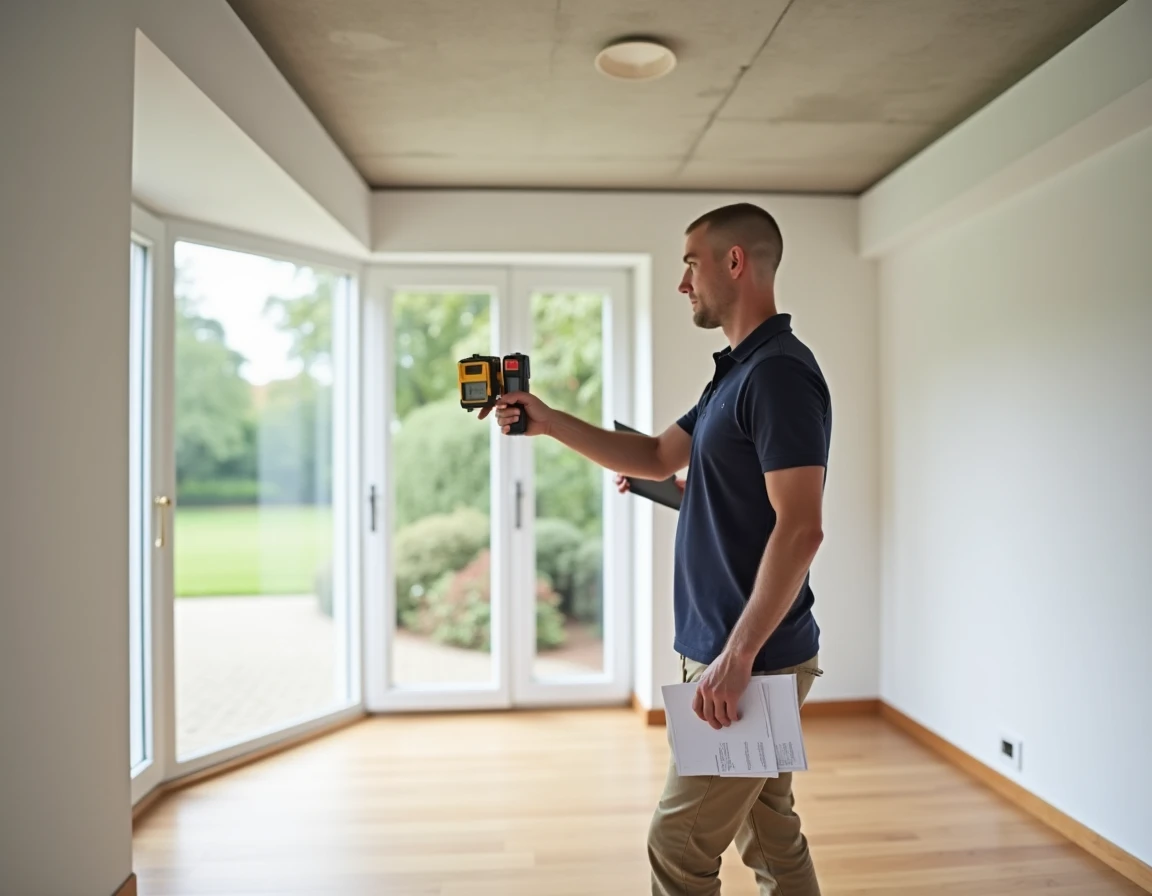
Having a certified assessor intervene for a contradictory measurement protects both parties. The report mentions the method used, the excluded surfaces (areas under 1.80 m ceiling height, cellars, garages), and the margin of technical uncertainty. This document is the key piece of the file in case of dispute.
Correcting a living area is not a one-time process. The right contact depends on the nature of the error: tax office for property tax, insurer for home insurance, landlord or notary for a deed of sale or lease. Identifying the concerned area (living, Carrez, tax) and compiling a documented file with scaled plans and supporting documents remains the common basis for all these procedures.