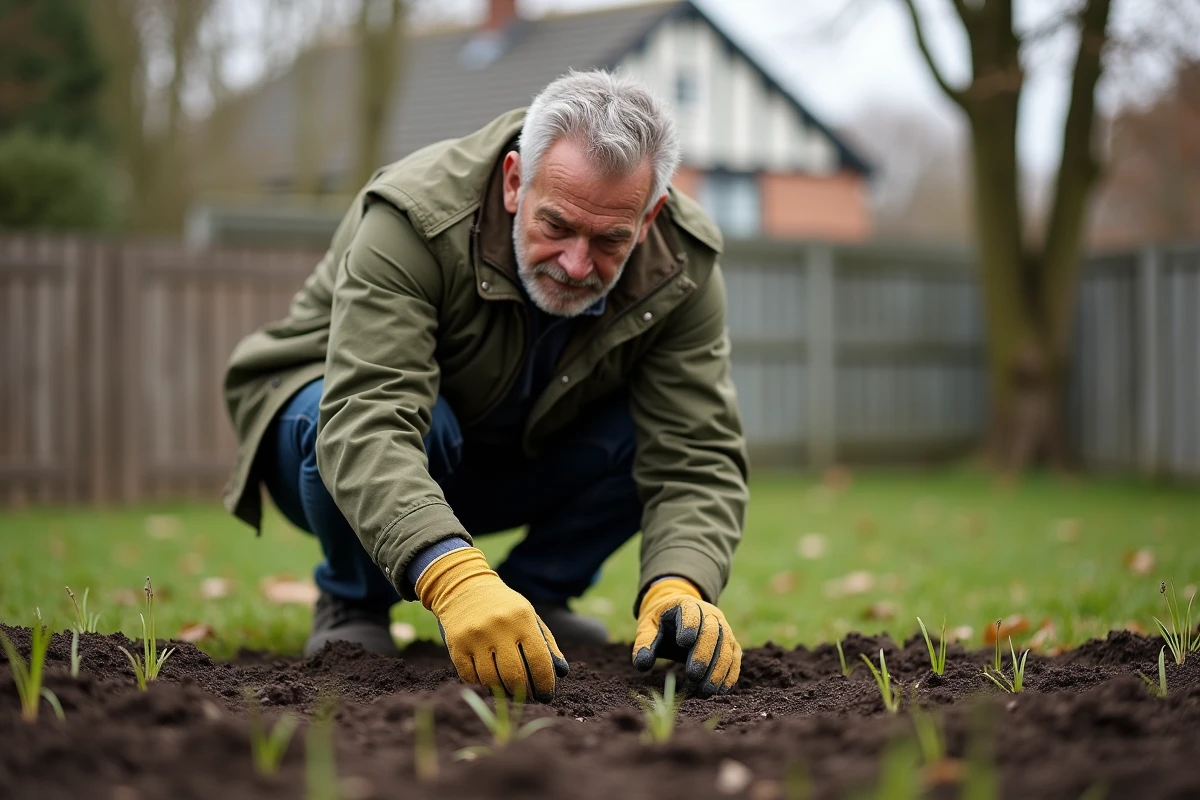
A failed lawn seeding in April often follows the same scenario: the seeds germinate, a week of dry heat sets in, and the young lawn scorches due to insufficient watering. We see this case every year, even among experienced gardeners. The problem does not stem from the seeding technique or the choice of seeds, but from the timing.
Choosing the right time to seed your lawn is far more crucial to success than the type of seeds or soil preparation.
Soil Temperature and Climate Windows: What Triggers Germination
Lawn grasses do not germinate based on the date on the calendar. They respond to soil temperature. As long as this temperature remains below about 10 °C consistently, the seeds remain dormant.
Since 2022, Val’hor and Astredhor have recommended determining the seeding date based on verifiable climate windows: dry soil, a forecast of at least ten to fifteen days without extreme heat or frost, and stable soil temperatures above about 10 °C. In practice, we no longer look at the month; we check the soil thermometer and the ten-day weather forecast.
When looking for the best time to seed grass, the answer depends less on the theoretical season than on the actual conditions at the time of seeding. Soil still saturated with water after a rainy winter or dry ground after a rainless spring will not yield the same results, even on the same date.
Fall Seeding or Spring Seeding: Why Fall Has the Advantage
Historically, spring (March-April) and fall (September-October) were presented as two equivalent windows. This is no longer the case. Météo-France and INRAE report a trend toward drier springs and earlier heat waves, making late summer and early fall seeding more reliable in much of mainland France.
Several agricultural chambers (Loire, Rhône) report an increasing failure rate for spring sowings, both among amateurs and professionals. The main reason: watering restrictions and spring droughts. They explicitly recommend favoring the period from mid-August to the end of September for new lawns.
What Makes Fall More Favorable
- The soil retains the heat accumulated during the summer, which maintains favorable temperatures for germination even as the air begins to cool
- Autumn rains provide consistent moisture without relying on watering, a decisive advantage in areas subject to drought orders
- The competition from weeds significantly decreases starting in September, allowing more room for young grasses to establish
Seeding can still be done in spring, but one must be prepared to water regularly for several weeks and accept a higher risk of failure if the weather turns.
Adjusting the Seeding Date for Your Region
In Île-de-France or northern Loire, September sowings work well until mid-October. The soil is still warm, the first frosts rarely arrive before November, and the seeds have time to germinate and root.
In southern France, the autumn window often opens as early as the end of August, as soon as temperatures drop below summer peaks. Seeding can be done until early October without issue in most cases. Feedback on this point varies according to local microclimates, but the principle remains the same: we wait for the soil to no longer be scorching and for a minimum of moisture to return.
For spring, the useful window is between March and May, progressing from south to north. A March seeding in the Midi, an April-May seeding in the north. The goal is to seed early enough for the seeds to take advantage of the last spring rains before the heat arrives.
Preparing the Ground Before Seeding: Steps That Change the Outcome
The timing is not everything. A seeding done during the ideal climate window will fail on poorly prepared soil. Here are the concrete actions that make a difference.
- Check the soil drainage: clayey ground that retains water drowns the seeds. If water stands after rain, it is necessary to amend with coarse sand before seeding
- Weed manually or mechanically at least two to three weeks before seeding, to eliminate germinating weeds
- Level the surface with a rake and lightly compact with a roller so that the seeds are in direct contact with the soil, without air pockets
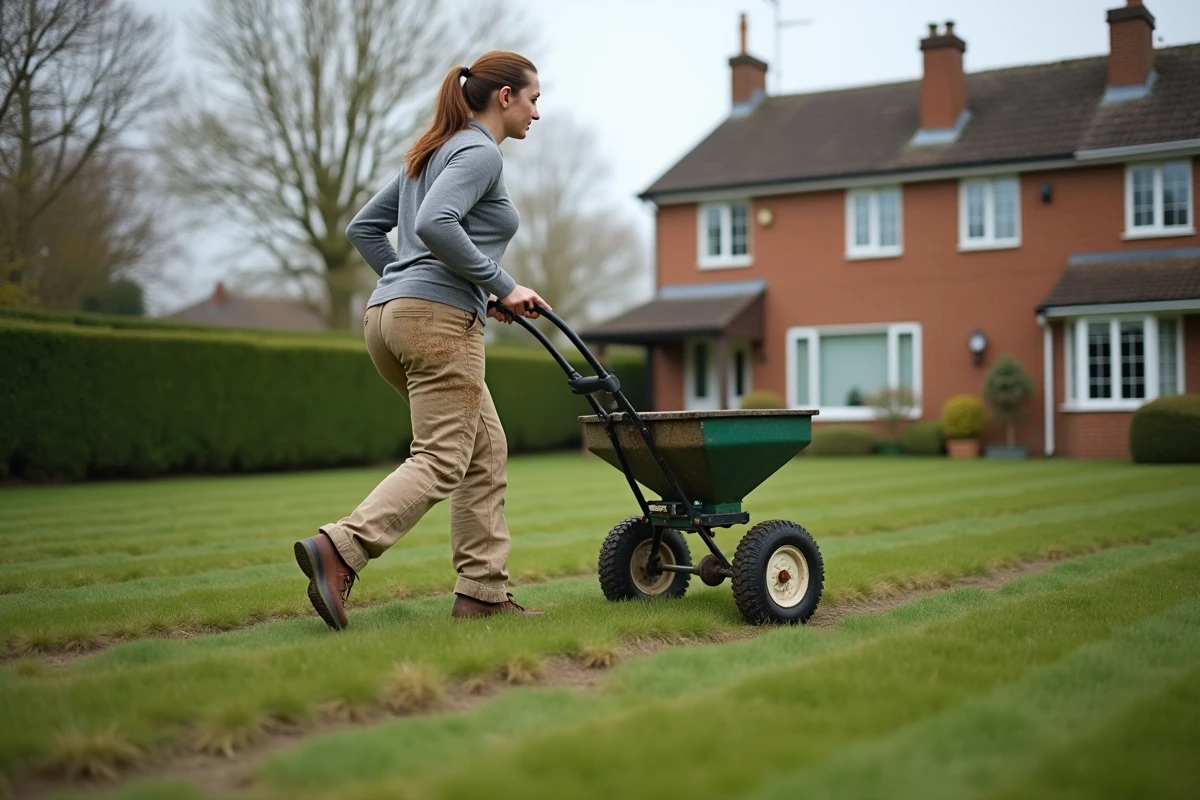
- Spread the seeds by crossing the passes (one pass north-south, one pass east-west) to achieve an even distribution
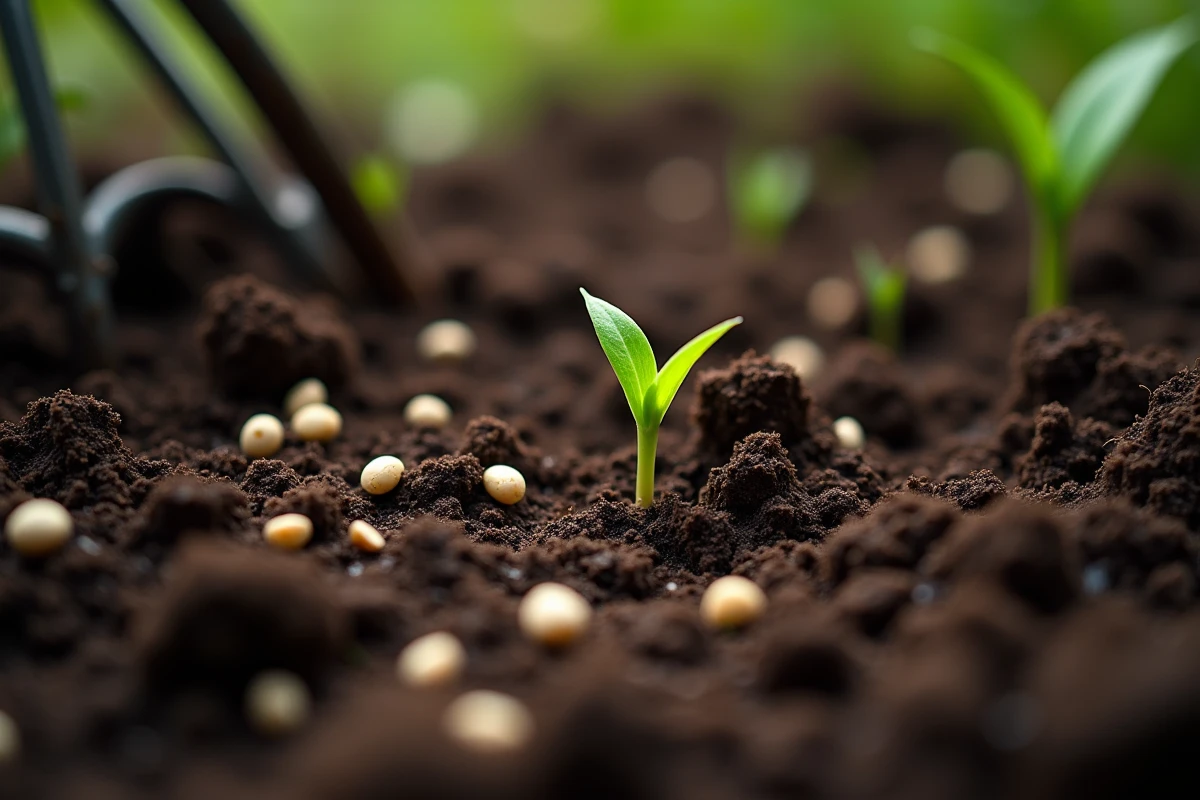
After seeding, a light roller pass presses the seeds into the soil. Then, water with a fine spray without creating runoff. During the germination phase, the soil must remain consistently moist on the surface, which requires daily watering in the absence of rain, especially in spring.
First Mowing and Post-Seeding Maintenance
Wait for the grass to reach a sufficient height before the first mowing. Mowing too early pulls up the young seedlings that are poorly rooted. During this first cut, set the blade to a high position to remove only one-third of the blade height.
The first weeks after germination remain critical. An autumn seeding naturally benefits from rains and mild temperatures to develop its root system before winter. A spring seeding, on the other hand, goes directly into competition with summer heat, which explains why autumn remains the safest season to create a lawn.
The choice of seeding date is far from a cosmetic detail. It is the decision that determines whether one will water their lawn for six weeks while crossing their fingers or whether they will let the weather do most of the work. Soil thermometer, ten-day forecasts, soil condition: three quick checks that are better than any gardening calendar displayed on a seed packet.