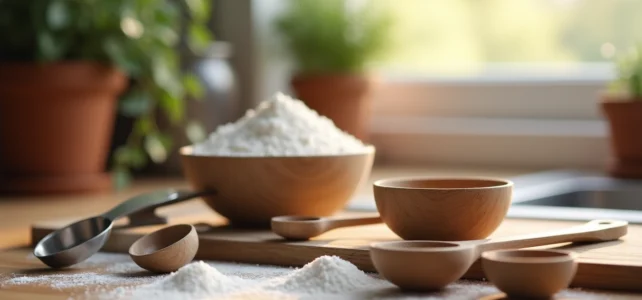
Volume measurements play a fundamental role in cooking, where precision can make all the difference between a successful dish and a complete failure. To avoid unpleasant surprises, you need to know how to effectively use the tools at your disposal, such as cups, measuring spoons, and scales.
Some simple tips can also greatly facilitate this task. For example, sifting flour before measuring it helps avoid clumps and achieve a more accurate measurement. Similarly, leveling dry ingredients with the back of a knife ensures consistency in preparations. By adopting these practices, cooking becomes not only easier but also more reliable.
The Fundamentals of Mastering Volume Measurements in Cooking
In the culinary arts, mastering volume measurements is essential for successfully executing recipes. Commonly used units of measurement include liters, centiliters, tablespoons, teaspoons, and cups. Each unit has its specific role, whether for liquid ingredients like oil, milk, and sauces, or dry ingredients like flour, sugar, and spices. The density of the ingredients must also be taken into account to ensure consistency in culinary results.
Liquid Ingredients
Liquid ingredients require precise measurements to avoid imbalances in recipes. Using graduated measuring cups in milliliters and centiliters ensures optimal accuracy. For the conversion of 1 quart of a liter to cl, remember that 1 quart of a liter equals 25 centiliters.
Dry Ingredients
Dry ingredients, due to their varying density, require special attention. For flour and sugar, it is recommended to use cups and measuring spoons specifically designed for dry ingredients. Sifting flour before measuring and leveling dry ingredients with the back of a knife are common practices to achieve accurate measurements.
- Tablespoon: 15 milliliters
- Teaspoon: 5 milliliters
- Cup: 240 milliliters
Conversions and Measuring Tools
To facilitate conversion between different units of measurement, there are conversion charts and mobile applications that can be extremely helpful. Kitchen scales, measuring spoons, and measuring cups are essential tools for obtaining precise measurements. Mobile applications and recipe guides offer practical advice for accurate conversions, making the culinary experience more reliable and enjoyable. 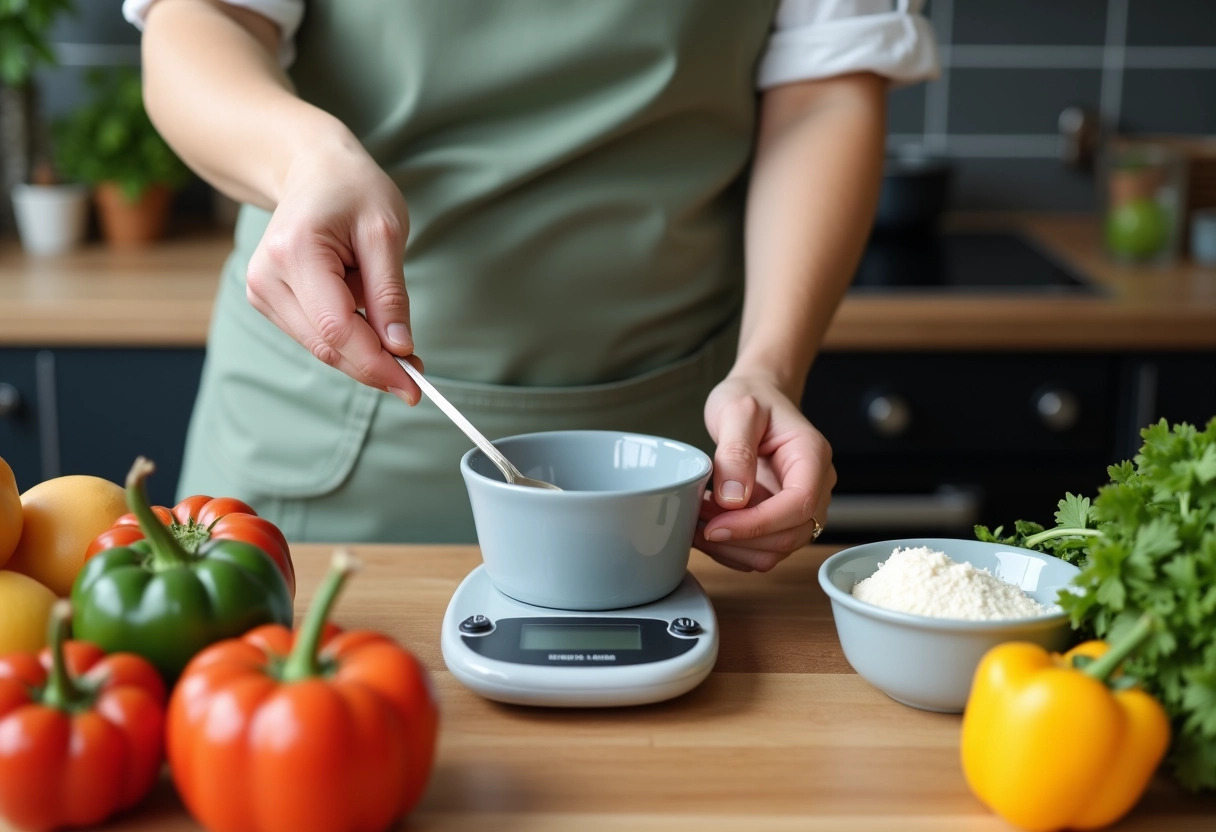
Tips and Practical Tools for Accurate Conversions
To achieve precise measurements in cooking, several tools and tips can be utilized. Using kitchen scales allows for accurate weighing of both dry and liquid ingredients. Digital scales offer precision to the gram, which is essential for certain recipes requiring strict accuracy.
- Measuring cups: Use graduated measuring cups to measure liquids. They are available in milliliters and centiliters, thus facilitating conversions.
- Measuring spoons: Tablespoons and teaspoons, often sold in sets, are indispensable for measuring small quantities.
Converters and Mobile Applications
To simplify conversions, mobile applications and online converters are practical tools. These applications provide conversion charts for volumes, masses, and even cooking temperatures. They are particularly useful for international recipes using different measurement systems.
- Volume/mass converters: These tools allow for converting volumes into specific masses for each ingredient, taking their density into account.
- Temperature converters: They facilitate conversion between Celsius and Fahrenheit, ensuring optimal cooking.
Guides and Experience
Guides and cookbooks offer practical advice for accurate conversions. Culinary experience and intuition also play a major role in the precision of measurements. By combining these tools with regular practice, the consistency of culinary results will be assured.