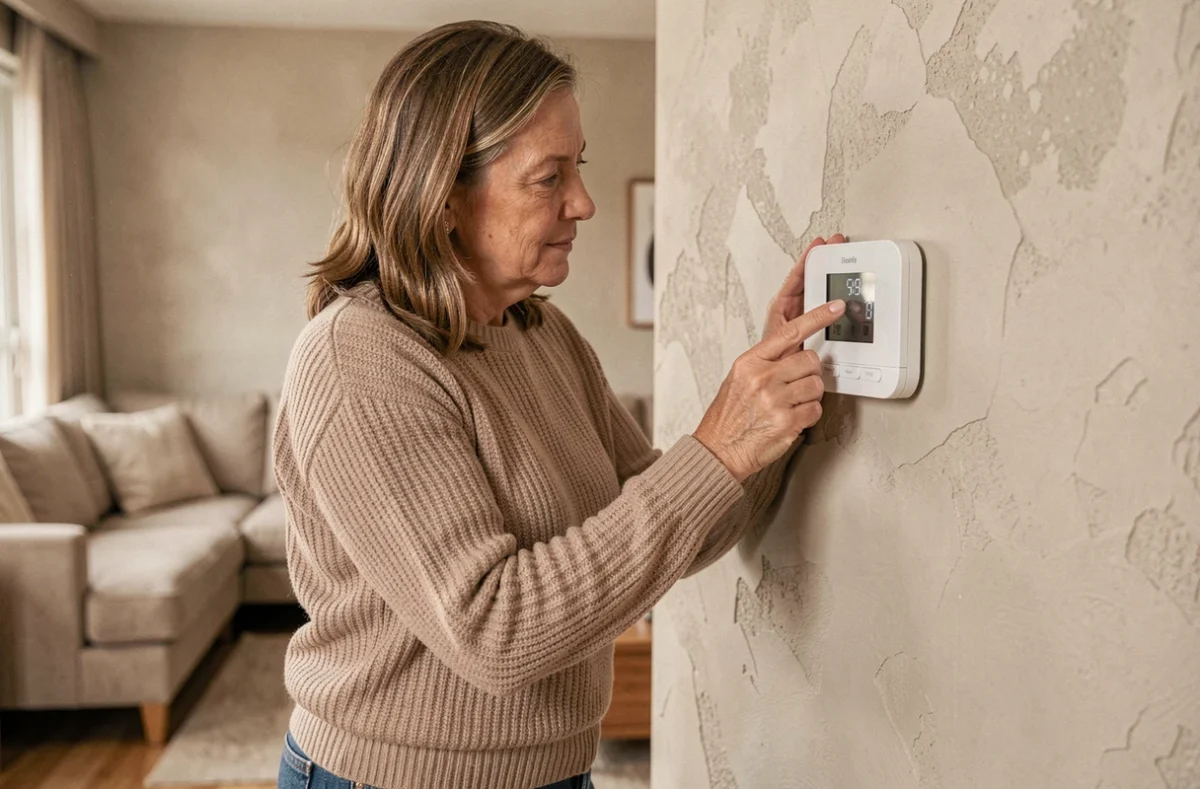
The thermostat displays 21 °C, the set temperature has been reached, and the boiler is still running. Before suspecting a fault, it’s important to understand how modern boiler controls work. In most cases, this is normal.
Burner running or pump running: two very different situations
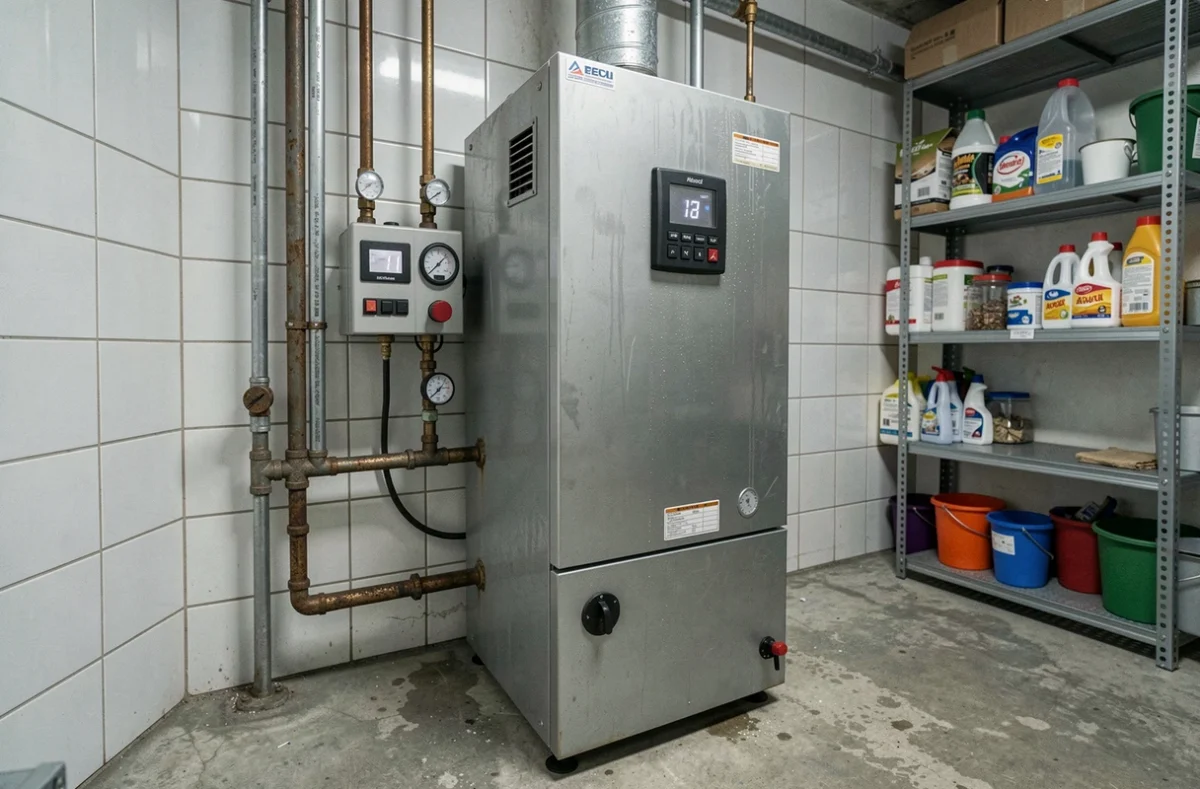
You can hear the boiler running even though the thermostat displays the set temperature. The first thing to check is what’s actually running. The burner and circulation pump don’t always run at the same time. On many models, the burner may have switched off while the pump continues circulating hot water through the radiators for several minutes.
This pump overrun distributes residual heat through the system. So the noise you hear doesn’t mean gas is being used. Your boiler’s installation manual describes this normal behavior for your specific model.
To tell the difference, check the flame (if your boiler has an indicator light) or look at the appliance’s display. If it shows standby mode or zero output, only the pump is running. To better understand the meaning of a thermostat reading of 21 °C and what that setting actually entails, distinguishing between the burner and the pump is the first thing to do.
Gas boiler modulation: running for a long time doesn’t mean wasting energy
You may have noticed that your old boiler switched on and off frequently, sometimes every few minutes. Modern boilers work differently. They use a process called modulation.
How modulation works, in simple terms
Instead of heating at full power and then switching off, a modulating boiler gradually reduces its flame as the temperature approaches the set point. It can drop to a fraction of its maximum output. The burner stays on, but runs at a very low level.
As a result, the room temperature settles gently around 21 °C without sudden fluctuations. This approach uses less energy than repeated on-off cycles, because each restart uses more fuel than maintaining a reduced flame.
Why repeated on-off cycles are a problem
Short cycling (repeatedly switching on and off) has three practical effects:
- Each time the burner ignites, it uses extra gas compared with running continuously at low output, increasing your heating bill.
- Mechanical parts (the gas valve and ignition electrode) wear out faster because they are subjected to thermal and electrical stress with every cycle.
- The room temperature fluctuates between too hot and too cold instead of staying stable, reducing comfort.
A boiler that modulates at low output after reaching 21 °C is doing exactly what it was designed to do.
Poorly positioned thermostat: how its location can affect heating control
The thermostat measures the temperature exactly where it’s installed—not elsewhere. If your home has several rooms with different exposures, temperatures can vary noticeably from one area to another.
Have you noticed that the room where the thermostat is located is cooler than the others? If the sensor is in a poorly heated hallway, it will keep calling for heat even when the living room is already at a comfortable temperature. The opposite is just as problematic: a thermostat exposed to direct sunlight or located right next to a radiator will show an artificially high temperature and switch off the heating too soon in the rest of the home.
If your thermostat is poorly positioned, the boiler receives instructions that don’t reflect your home’s actual heating needs.

When a boiler running continuously signals a real problem
The sections above describe normal behavior. The situation changes if the temperature rises well above the set point. If the thermostat displays 21 °C but an independent thermometer reads 23 or 24 °C, and the burner is still running at high output, you should look for a technical issue.
Checks you can do yourself
- Check the thermostat’s batteries or power supply. A thermostat with low batteries may send a constant call for heat to the boiler.
- Check the boiler’s water flow temperature. If it’s set too high (higher than necessary), the radiators will stay hot long after the burner has switched off, making it seem as though the system never stops.
- Test the radiators’ thermostatic valves. A valve stuck in the open position prevents room-by-room temperature control and can force the boiler to keep compensating.
- Check whether all the radiators heat evenly. A radiator that’s cold at the bottom and hot at the top may have air in the system, disrupting water circulation and reducing efficiency.
When to call a professional
If the temperature keeps rising despite a working thermostat, or you hear unusual noises (knocking or whistling), the problem may lie with the three-way valve, the circulation pump, or the boiler’s circuit board. A heating engineer can measure the pressure, check the flow rate, and diagnose a faulty component that isn’t apparent from a visual inspection.
An oversized boiler can also cause abnormal cycling, but diagnosing this requires a heat-loss calculation that only a professional can carry out reliably.
A boiler continuing to run after the thermostat reaches 21 °C is often a sign that the controls are working properly, not that there’s a fault. Low-output modulation, pump overrun, and the radiators’ thermal inertia explain the vast majority of cases. Keep a separate thermometer handy: as long as the measured temperature stays close to the set point, your system is working as it should.