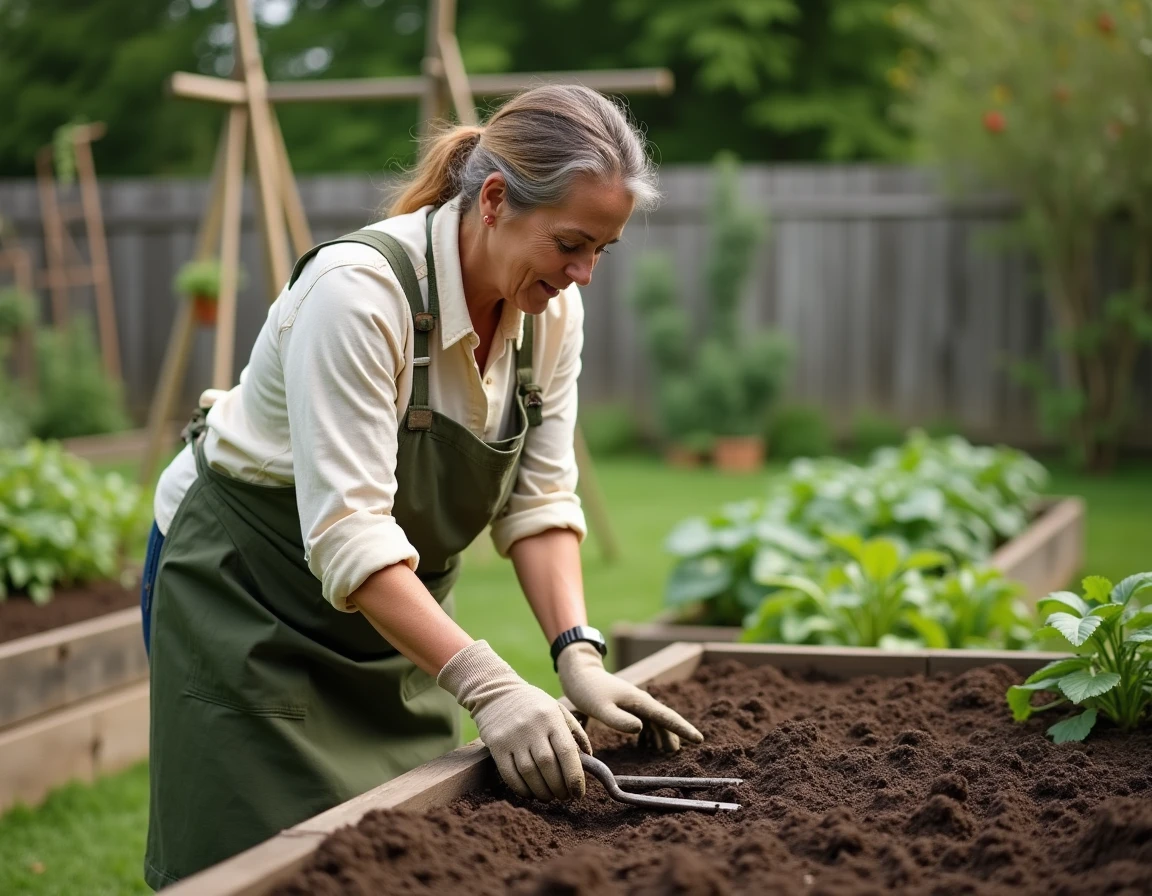
The grelinette does not prepare soil: it opens it. This nuance changes everything in a productive organic vegetable garden. Where the spade turns the horizons and the tiller pulverizes the structure, the grelinette cracks the profile without mixing the layers. The result is a deeply aerated soil where microbial life remains in place, ready to mineralize organic inputs.
Working Depth and Root Behavior According to Soil Type
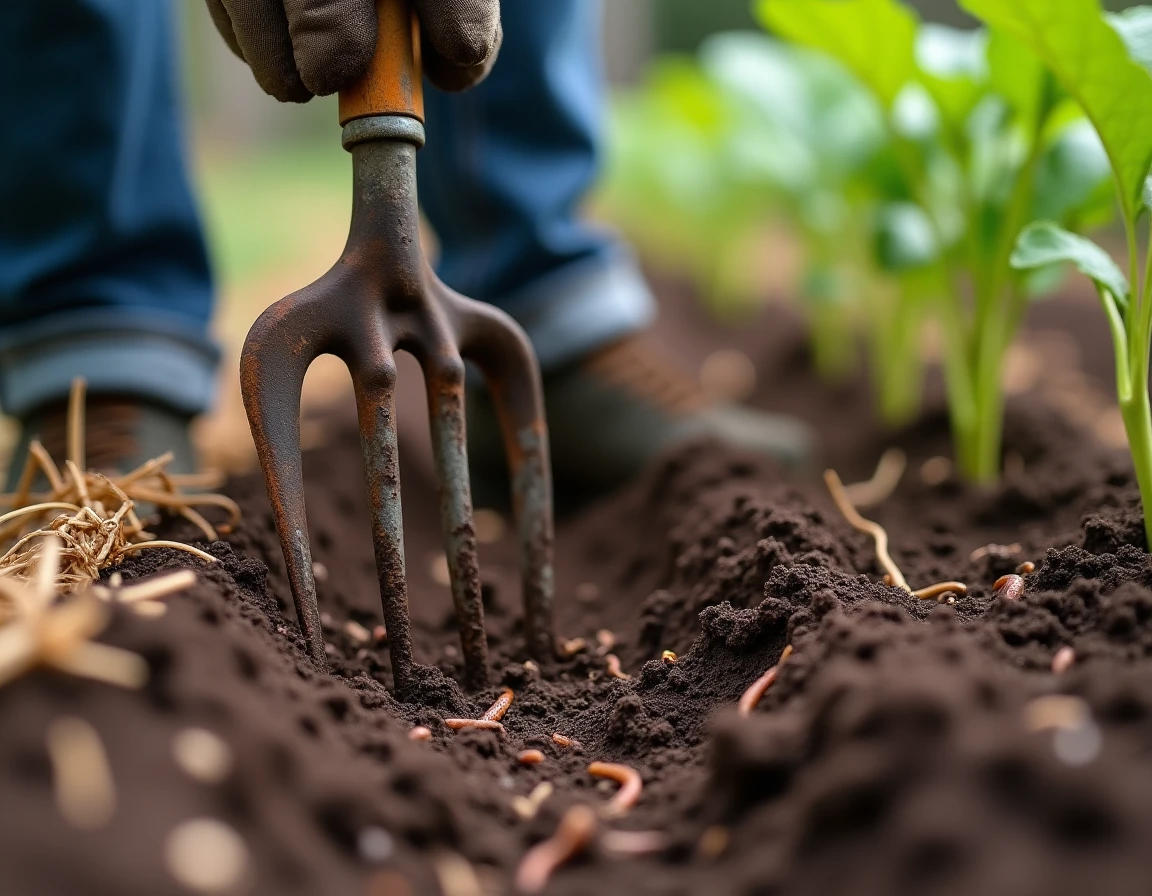
One point that general guides overlook: the grelinette does not work the same way depending on soil texture. On clay-loam soil, the tines penetrate difficultly beyond the plow pan if it has not been fractured beforehand. We recommend a first dry pass at the end of summer when the clays are naturally retracted and cracked. The second pass, in spring, then reaches the full length of the tines.
On sandy or sandy-loam soil, the passage is easier but less useful: natural porosity makes aeration unnecessary if a plant cover has been maintained. In this case, the grelinette mainly serves to superficially incorporate compost into the top few centimeters, not to decompact.
The root behavior of vegetables changes radically according to this preparation. Deep-rooted crops (carrots, parsnips, black radishes) require a loose and continuous profile. A poorly executed grelinette pass, which leaves compact clumps between the tines, causes forked roots. We observe better results by crossing two perpendicular passes, spaced by the width of one tine, on the beds intended for root vegetables.
The models offered on grelinette-warrior.com allow for comparison of working widths and tine spacing, two parameters often neglected at the time of choice.
Surface Threshold and Managing Labor Intensity in Organic Gardening
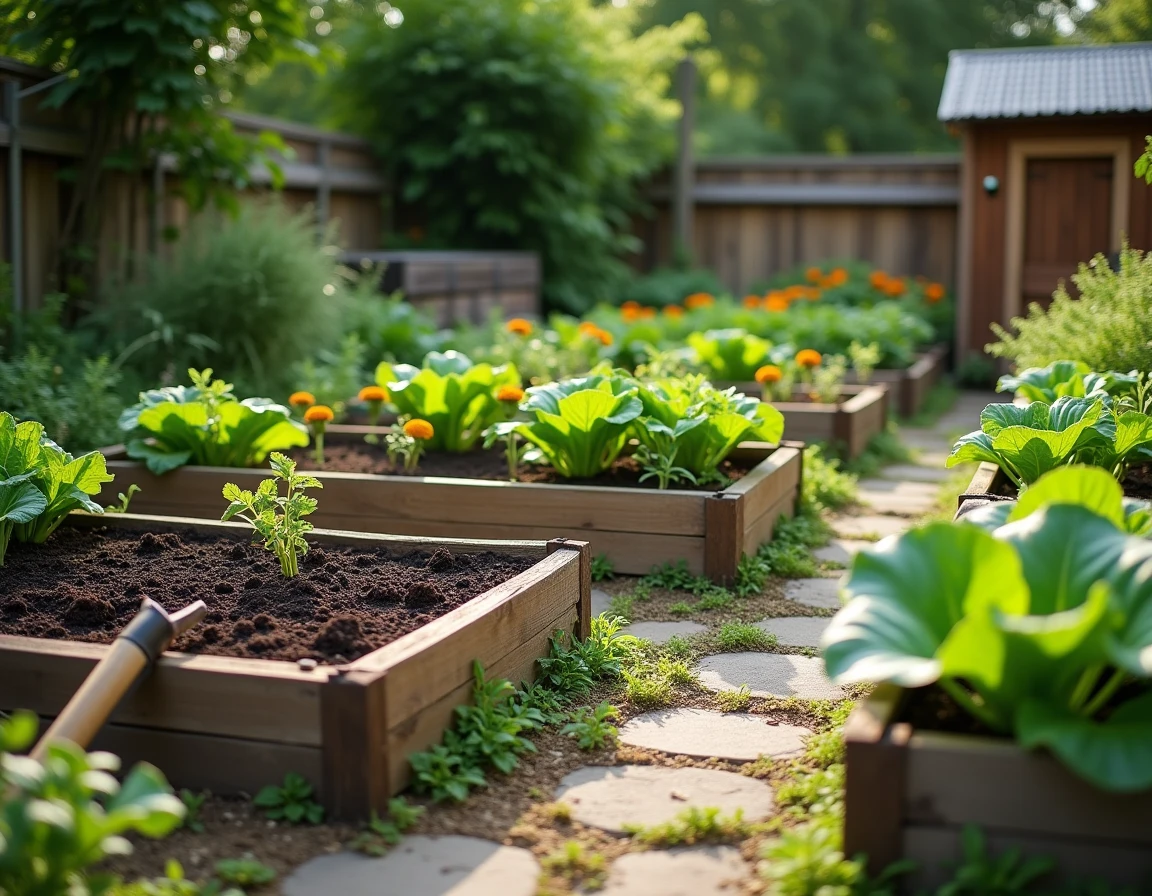
Beyond about fifty square meters of cultivated area, the grelinette becomes counterproductive in terms of time and fatigue. This threshold, rarely explained in mainstream content, conditions the entire planning of a productive organic vegetable garden.
Below this surface, a complete pass takes less than an hour on properly mulched soil in winter. Beyond that, the repetition of the action (pushing down, tilting, pulling back) puts cumulative strain on the lower back and shoulders. Even with good technique, the effort/surface ratio deteriorates quickly.
The solution is not to replace the grelinette with a tiller, which destroys the structure at depth. It consists of reducing the area to be worked each season:
- Cover unused beds with thick mulch or woven fabric to maintain porosity without mechanical intervention
- Practice crop rotation on permanent beds, where only the bed at the beginning of the cycle receives a grelinette pass before surface composting
- Use a rake or fork for localized touch-ups, reserving the grelinette for the opening of the season
This approach aligns with the practices of bio-intensive micro-farms, where the grelinette opens the bed only once in spring. For the rest of the season, the soil is no longer worked at depth.
Permanent Cover and Grelinette: A Combined Protocol
Using the grelinette without a soil cover strategy amounts to aerating a profile that will compact again at the first rainy episode. The sequence of grelinette followed by mulching constitutes the technical foundation of a productive organic vegetable garden.
The protocol we apply on permanent beds follows a precise order. At the end of winter, the residual mulch is removed or raked. Mature compost is spread on the surface. The grelinette then passes to crack the soil and roughly mix the compost into the top few centimeters. After planting or sowing, a new layer of mulch immediately covers the bare soil.
The choice of mulch conditions the result. Fresh wood chips (BRF) placed just after the grelinette pass can cause a temporary nitrogen deficiency in the root zone. We prefer a mulch of hay or straw, which decomposes faster and nourishes soil life without nitrogen competition. BRF is reserved for paths and beds in winter rest.
Green Manures and Non-Working Between Crops
Between two crops on the same bed, sowing green manure (phacelia, mustard, crimson clover) advantageously replaces a second pass of the grelinette. The roots of the green manure maintain the porosity created by the first pass and feed microbial life with root exudates.
When it comes time to re-cultivate the bed, the green manure is mowed and laid flat on site. A simple pass with a rake is then sufficient to prepare the seedbed, without bringing out the grelinette. This non-working in between is the central principle of regenerative systems applied to gardening.
Choosing the Grelinette: Tine Spacing and Number of Handles
The number of tines determines the working width, but it is the spacing between the tines that conditions the quality of the loosening. Too wide a spacing leaves unworked strips. Too narrow a spacing makes penetration difficult in clay soil, as resistance increases proportionally.
For an organic vegetable garden with beds 80 cm wide, a model with four or five tines covers the bed in a single pass. Models with three tines are better suited for heavy soils or smaller gardeners, as the effort per tine is better distributed.
The length of the handles also plays a direct role in ergonomics. Handles that are too short force bending, negating the postural benefit of the tool. Handles should reach shoulder height to allow for a tilting movement without lumbar flexion.
The material of the tines (hardened steel, stainless steel) influences durability against the abrasion of stony soils. On stony soil, forged tines withstand better than welded tines, which can break at the point of attachment.
A productive organic vegetable garden relies less on the intensity of soil work than on its accuracy. The grelinette, used at the right time, on the right surface, combined with permanent cover, transforms tired soil into a living growing medium in just a few seasons. The only trap would be to use it too often.