A chainsaw is a cutting tool with a chain driven by a petrol engine, a corded electric motor or a battery. Its danger comes not only from the speed of the chain but also from the conditions in which it is used: slopes, obstacles on the ground and the presence of other people. Choosing the right model is not enough; you also need to assess the worksite, wear suitable protective equipment and consider whether spare parts will remain available over the long term.
Replaceable batteries and available parts: what the EU regulation changes
Battery-powered chainsaws are popular for their low noise levels and easy starting. Their main drawback is battery life: after a few hundred charge cycles, capacity drops significantly.
The EU Batteries Regulation sets out removal and replacement requirements that apply from 18 February 2027. However, certain product categories may be exempt. Not all batteries will be affected in the same way, and assuming that manufacturers will have to make every battery pack removable by the user would be an overly simplistic reading of the text.
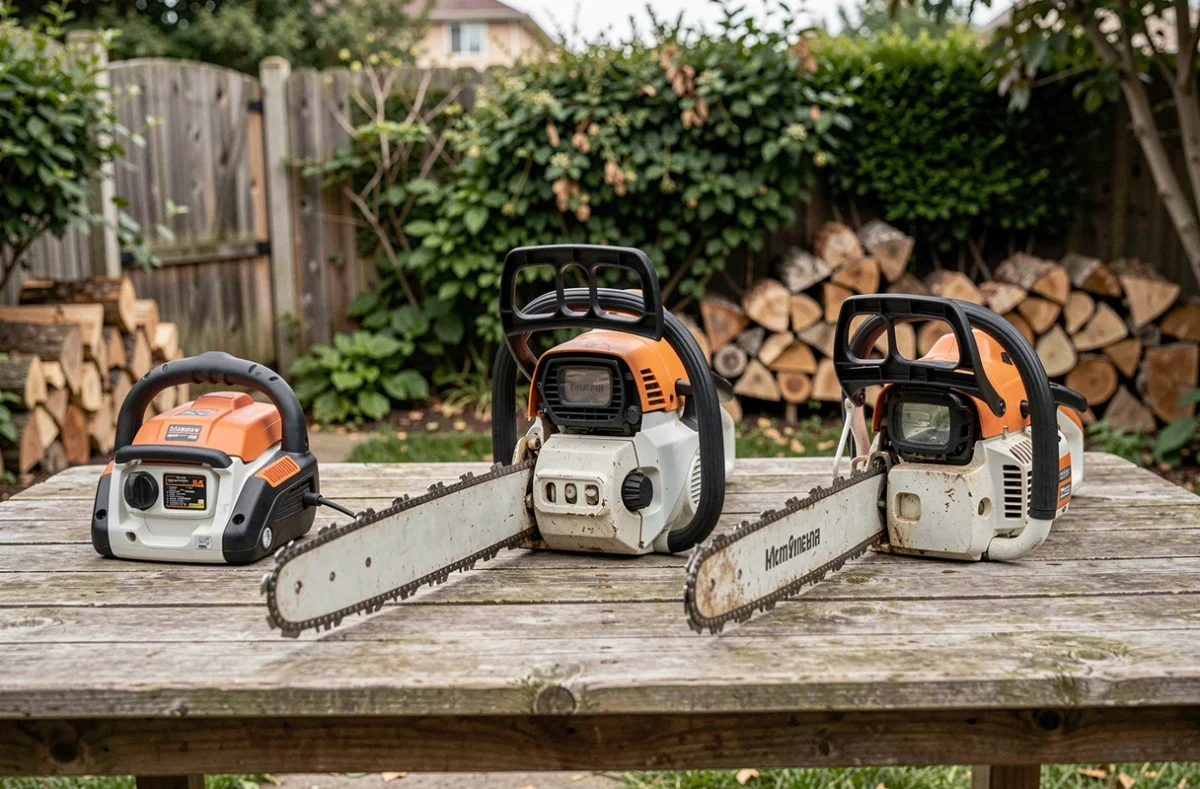
Before buying, check three things. First, the manufacturer’s spare parts catalogue: a battery listed and sold separately is a positive sign. Next, check whether batteries are compatible across generations within the same brand. Finally, make sure there is a network of authorised repairers able to replace a welded or clipped-in battery pack. These chainsaw tips can help you avoid buying a tool that becomes unusable after just a few seasons because no replacement battery is available.
Assess the worksite before choosing a chainsaw
The choice between petrol, corded electric and battery-powered models depends less on the brand than on the terrain. A flat garden with small-diameter branches presents very different challenges from a sloping woodland with conifer trunks.
Cutting diameter and bar length
The guide bar should be longer than the diameter of the wood being cut. For routine pruning and cutting small logs for firewood, a short bar is sufficient and keeps the machine lighter. Felling large-diameter trees requires a longer bar and a more powerful motor.
Slopes, obstacles and escape routes
Worksite preparation is just as important to safety as the tool itself. Practical training courses cover this assessment in detail: checking the slope, clearing obstacles and identifying an escape route in case a tree falls unexpectedly. The chain can become pinched by wood under tension—a common hazard that can only be anticipated by inspecting the trunk beforehand.
- Check the slope and identify the tree’s natural direction of fall before making any felling cuts.
- Clear a sufficiently large work area and keep anyone without protective equipment at a safe distance.
- Look for dead branches overhead (hanging deadwood) that could fall due to vibrations.
- Plan a clear escape route leading away from the intended direction of fall.
Protective equipment: compatibility and wear
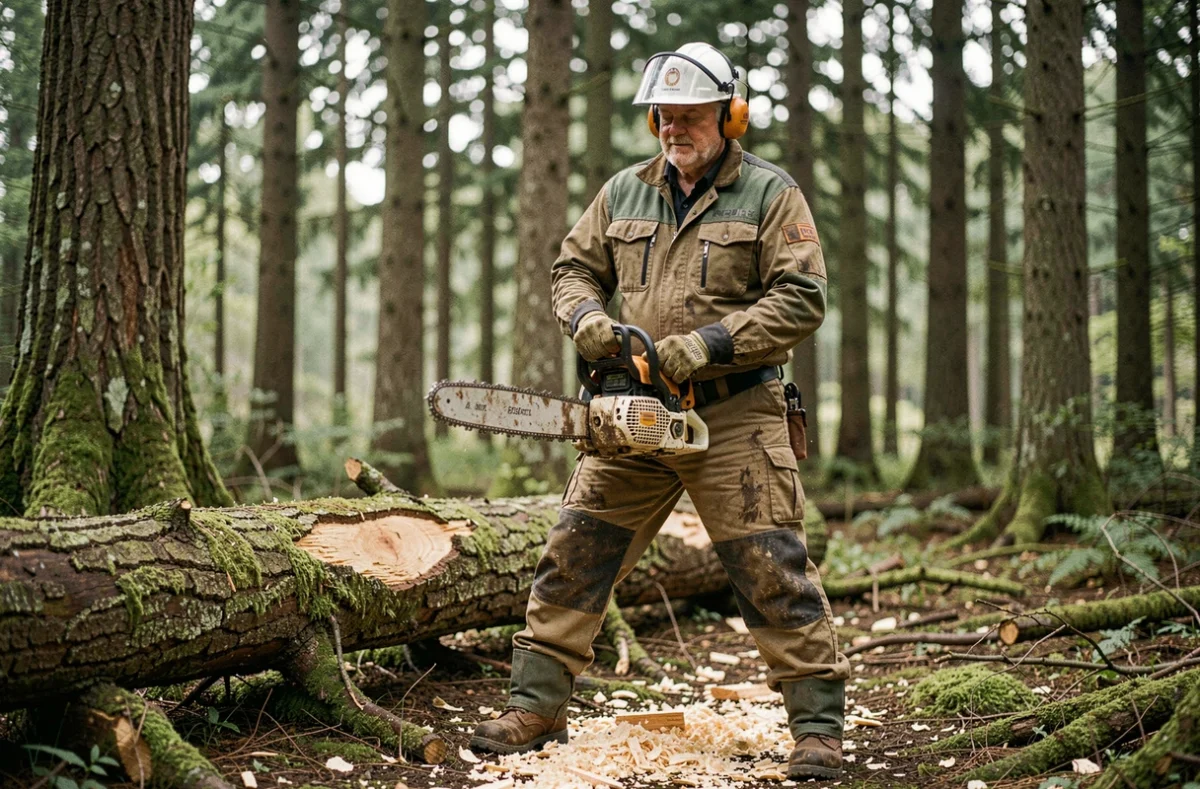
Wearing a forestry helmet, chainsaw-protective trousers, gloves and non-slip boots is a well-known minimum. Less widely understood is that worn or incompatible PPE may no longer provide adequate protection.
The French Labour Code (Article R4323-93) states that equipment worn at the same time must be compatible and retain its effectiveness. Chainsaw-protective trousers with fibres that were cut in a previous incident can no longer stop the chain. Similarly, a helmet whose shell has been struck loses its impact-absorption properties.
Private users are not legally required to undergo training, but the risks are the same. Replacing damaged PPE before each cutting season is a modest expense compared with the cost of an injury. The helmet visor, which often gets scratched after just a few uses, deserves particular attention: reduced visibility increases the risk of a misjudged movement.
Maintaining the chain and guide bar: steps that extend the life of your chainsaw
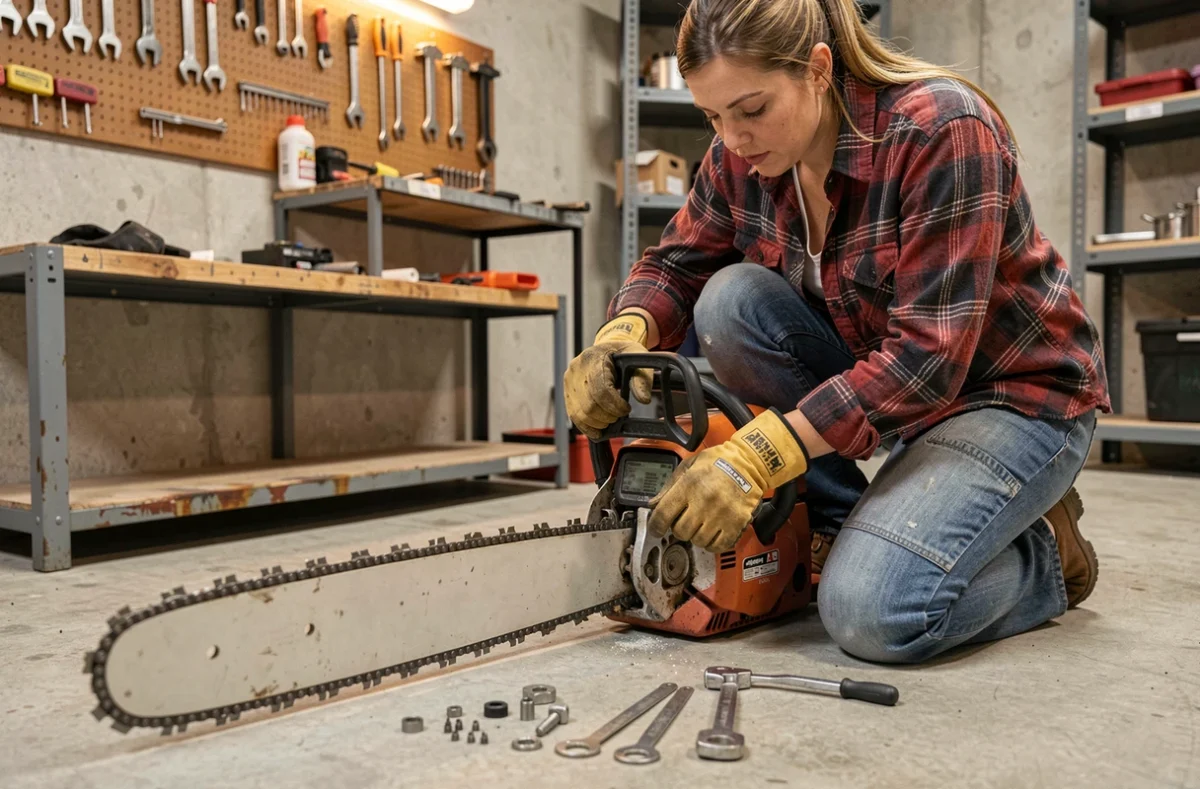
Sharpening the chain is the most worthwhile maintenance task. A blunt chain forces you to push harder, accelerates wear on the guide bar and drive sprocket, and increases the risk of kickback.
Chain tension and lubrication
A properly tensioned chain should neither sag beneath the guide bar nor resist being moved by hand. Check it with the engine off by pulling the chain at the middle of the bar: it should lift slightly and then return to position. Check the chain oil reservoir every time you refuel (on petrol models) or before each work session (on battery-powered models).
Air filter and spark plug on petrol models
A clogged air filter makes the air-fuel mixture too lean, causing the engine to run hotter and lose power. Cleaning the filter after every extended use helps prevent this. A spark plug with a blackened or worn electrode can cause starting problems. Replacing it periodically is part of routine maintenance.
- Sharpen the chain as soon as the chainsaw produces fine sawdust instead of clean chips.
- Turn the guide bar over regularly to distribute wear across both sides of the rail.
- Clean the guide bar groove and oil port to ensure proper oil flow.
- Store the machine in a dry place with the chain slightly slackened. At the end of the season, drain the fuel tank on petrol models.
Choosing a chainsaw is a decision that affects several years of use. Checking at the time of purchase that parts (chain, guide bar, battery and filters) will remain available from the manufacturer or through independent suppliers helps prevent you from being left with an unsupported machine. A well-maintained model with readily available parts lasts twice as long as a neglected high-end model.